What Are The Levels Of
Pesticides In Food?
Why Should You Care About Pesticides?
There is growing consensus in the scientific community that small doses of pesticides and other chemicals can adversely affect people, especially during vulnerable periods of fetal development and childhood when exposures can have long lasting effects. Because the toxic effects of pesticides are worrisome, not well understood, or in some cases completely unstudied, shoppers are wise to minimize exposure to pesticides whenever possible.
Will Washing and Peeling Help?
Nearly all of the data used to create these lists already considers how people typically wash and prepare produce (for example, apples are washed before testing, bananas are peeled). While washing and rinsing fresh produce may reduce levels of some pesticides, it does not eliminate them. Peeling also reduces exposures, but valuable nutrients often go down the drain with the peel. The best option is to eat a varied diet, wash all produce, and choose organic when possible to reduce exposure to potentially harmful chemicals.
How This Guide Was Developed
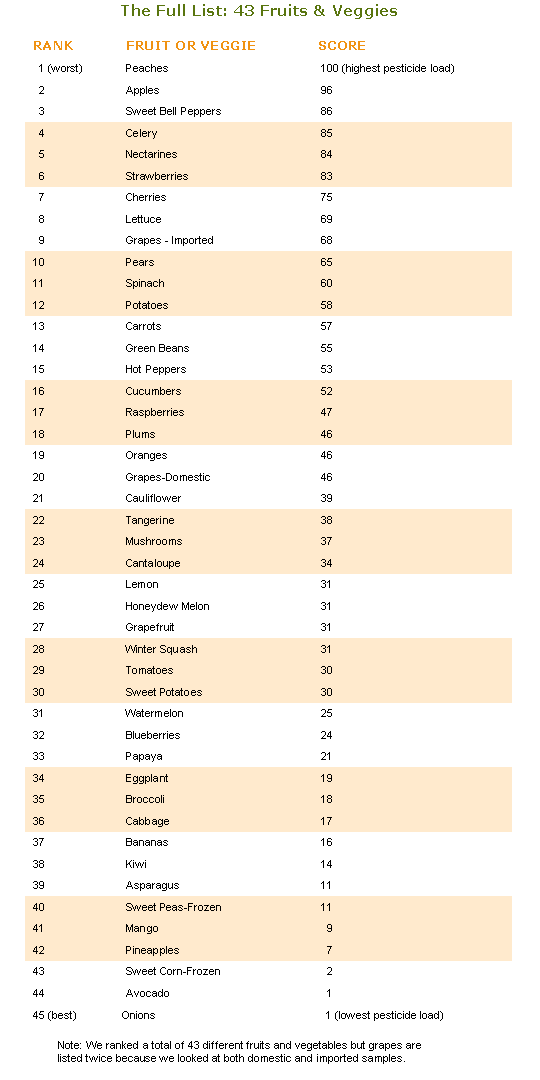
The produce ranking was developed by analysts at the not-for-profit Environmental Working Group (EWG) based on the results of nearly 43,000 tests for pesticides on produce collected by the U.S. Department of Agriculture and the U.S. Food and Drug Administration between 2000 and 2004. A detailed description of the criteria used in developing the rankings is available as well as a full list of fresh fruits and vegetables that have been tested (see below).
EWG is a not-for-profit environmental research organization dedicated to improving public health and protecting the environment by reducing pollution in air, water and food. For more information please visit
www.ewg.org
Shopper's Guide to Pesticides in Produce by Environmental Working Group is licensed under a
Creative Commons Attribution-Noncommercial-No Derivative Works 3.0 United States License.
This information provided by The Environmental Working Group a not-for-profit environmental research organization dedicated to improving public health and protecting the environment by reducing pollution in air, water and food. For more information about EWG please visit
their web site.
Return to our Organic Food page from our Pesticides In Food page
Retrun from our Pesticides In Food page to the Organic Living Home Page